A bounty of random loot awaits you! Delve into the very Blizzardy world of Diablo to go ransack some dungeons with us in this point n' click n' kill classic! Clearly, everyone needs to be a trapsassin. At the same time.
Geremy@lasttimeonvideogames.com,
Tyler@lasttimeonvideogames.com,
Zach@alasttimeonvideogames.com,
or LTOVG@lasttimeonvideogames.com.
You can also go to the show page at plus.google.com/+LastTimeOnVideogames or comment on the site at www.lasttimeonvideogames.com.
Also, you can follow our tweets @LTOVG.
Necromancers get all the cool toys: automatic corpses, snarky skulls, cool cloaks. Therefore, you should show them what's up by talking your way around having to deal with them directly! Hitting them with your big metal stick is also an option, but that's way less interesting. Step into the world(s) of Planescape and try to recover your lost soul!
Geremy@lasttimeonvideogames.com,
Tyler@lasttimeonvideogames.com,
Zach@lasttimeonvideogames.com,
or LTOVG@lasttimeonvideogames.com.
You can also go to the show page at plus.google.com/+LastTimeOnVideogames or comment on the site at www.lasttimeonvideogames.com.
Also, you can follow our tweets @LTOVG.
Rivaling our list of SNES classics enters another great contender. Complete with drama, 2D fighting inputs, and a huge cast, this game is sure to rock the (air) boat. Just don't forget to let Cid fix ya up.
Next time on Last Time, Bayou Billy! A significant downgrade.
Now this is a knife!
Geremy@lasttimeonvideogames.com,
Tyler@lasttimeonvideogames.com,
Zach@lasttimeonvideogames.com,
or LTOVG@lasttimeonvideogames.com.
You can also go to the show page at plus.google.com/+LastTimeOnVideogames or comment on the site at www.lasttimeonvideogames.com.
Also, you can follow our tweets @LTOVG.
Journey back to a galaxy far, far away, and even further back in time than normal. Here, we can find the Jedi derping about as usual, and the Sith (who are apparently a whole species) just stepping in to muck things up. Will our plucky hero and their band of misfits be able to stop the impending Sith invasion? At least the lightsaber noises are cool.
Geremy@lasttimeonvideogames.com,
Tyler@lasttimeonvideogames.com,
Zach@lasttimeonvideogames.com,
or LTOVG@lasttimeonvideogames.com.
You can also go to the show page at plus.google.com/+LastTimeOnVideogames or comment on the site at www.lasttimeonvideogames.com.
Also, you can follow our tweets @LTOVG.
The most mystic thing about this game might be how you manage to carry 40 sets of armor and weapons on you without collapsing. Link does that all the time, though, so I guess it's fine. Join us to do the most absolutely generic questing because crystals n' stuff. Also, some archfiends or something? *yawn* I'm gonna go throw bombs at the skeleton.
Geremy@lasttimeonvideogames.com,
Tyler@lasttimeonvideogames.com,
Zach@lasttimeonvideogames.com,
or LTOVG@lasttimeonvideogames.com.
You can also go to the show page at plus.google.com/+LastTimeOnVideogames or comment on the site at www.lasttimeonvideogames.com.
Also, you can follow our tweets @LTOVG.
You know what screams classic SNES era RPGs? Dragon Ball Z! Oh, also one of the best RPGs ever, too. I feel like Chrono should speak up for himself more often, though. Why does he have a katana? Seriously? Oh, well, it's pretty sweet anyway.
Geremy@lasttimeonvideogames.com,
Tyler@lasttimeonvideogames.com,
Zach@lasttimeonvideogames.com,
or LTOVG@lasttimeonvideogames.com.
You can also go to the show page at plus.google.com/+LastTimeOnVideogames or comment on the site at www.lasttimeonvideogames.com.
Also, you can follow our tweets @LTOVG.
Nintendo's lesser known child, Fire Emblem, and its first appearance on our podcast! Sword some guys, ax some lances, shoot fireballs. This game's got it all... except telling you how to talk to other people. I suppose, though, that's a life skill that no game has taught.
(16:00) That thing with a 'C' that's Fallen London currency is Cryptic Clue. Yes, clues and secrets are currency. As is a Tale of Terror. This game is weird.
(22:00) Fire Emblem is fun, guys! We attempt to dissect why the combat in this is fun. We also talk about the general mechanics and how the story (which is "good") is mostly just a frame for some fantasy tactics time.
(29:00) Lyn is a Disney Princess!
Next time on Last Time, Zanac! Hopefully less construction this time.
Giant balls! Of energy!
Geremy@lasttimeonvideogames.com,
Tyler@lasttimeonvideogames.com,
Zach@lasttimeonvideogames.com,
or LTOVG@lasttimeonvideogames.com.
You can also go to the show page at plus.google.com/+LastTimeOnVideogames or comment on the site at www.lasttimeonvideogames.com.
Also, you can follow our tweets @LTOVG.
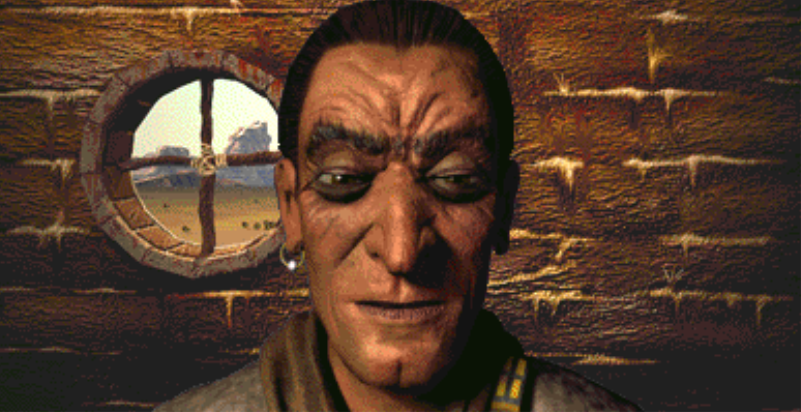
Get your power armor ready and pop some Rad-X, because we're exploring a post-nuclear wasteland at the start of a pretty cool series that doesn't afraid of rad scorpions.
Geremy@lasttimeonvideogames.com,
Tyler@lasttimeonvideogames.com,
Zach@lasttimeonvideogames.com,
or LTOVG@lasttimeonvideogames.com.
You can also go to the show page at plus.google.com/+LastTimeOnVideogames or comment on the site at www.lasttimeonvideogames.com.
Also, you can follow our tweets @LTOVG.
Apparently goddesses need rescuing, and Pit's the only cherub man enough to do it. Unfortunately, he hasn't been taking his vitamins, so he gets beaten up really easily. Also, he can't fly. Also, Death is trying to kill him, sometimes from multiple bodies at once. At least you centurion friends are only locked up in minimum security.
(39:00) Fortresses are actually pretty fun. And nutritious.
(40:20) Thieves. They suck.
Next time on Last Time, join us for "tactical" action in Gain Ground!
Boomerangs!
Geremy@lasttimeonvideogames.com,
Tyler@lasttimeonvideogames.com,
Zach@lasttimeonvideogames.com,
or LTOVG@lasttimeonvideogames.com.
You can also go to the show page at plus.google.com/+LastTimeOnVideogames or comment on the site at www.lasttimeonvideogames.com.
Also, you can follow our tweets @LTOVG.
Hark, and listen, for I shall tall ye a fantastic tale. You see, long ago, in the land of Baron, the king was a dick. Also, there was this guy who commanded their sweet airship force who was less of a dick, then redeemed himself. There were some other people, too, who could throw fireballs and stuff, but it's mostly about airship dude. He had great hair!
(36:00) The Antlion. This thing. Signposting problems.
(39:00) Lack of descriptions on items and rotation characters make progress somewhat lackluster. Not to mention there's some overlap between characters.
Geremy@lasttimeonvideogames.com,
Tyler@lasttimeonvideogames.com,
Zach@lasttimeonvideogames.com,
or LTOVG@lasttimeonvideogames.com.
You can also go to the show page at plus.google.com/+LastTimeOnVideogames or comment on the site at www.lasttimeonvideogames.com.
Also, you can follow our tweets @LTOVG.
Considered to be one of the greatest SNES games ever, this week we're tackling the story of a hero who must save the world... for Reasons! Grab a ton of different, but mechanically similar, weapons and bash some baddies to victory!
Grenade chickens! With no obvious segue, you can contact us at
Geremy@lasttimeonvideogames.com,
Tyler@lasttimeonvideogames.com,
Zach@lasttimeonvideogames.com,
or LTOVG@lasttimeonvideogames.com.
You can also go to the show page at plus.google.com/+LastTimeOnVideogames or comment on the site at www.lasttimeonvideogames.com.
Also, you can follow our tweets @LTOVG.
After a "totally planned we swear" hiatus, we're back with what might be one of the most awesome games about sailing and pirates ever. Also, there are assassins. It's also not the one you're thinking of. This week, we trade, steal, and sail our way to world domination with a remarkably accurate map of the 1520s!
(16:20) We talk (read complain) about game pacing. Arkham Asylum allows you to look around and stuff during the opening scene.
(26:00) New Horizons' cutscene problems: early 16-bit sprites moving around randomly is not entertaining.
(28:00) This game has 6 discrete scenarios. Like some other game by the same company.
(30:00) Go get famous. Discover the dodo. Attack everyone! Sell stuff and invest in cities! There are a ton of different ships. Sail the entire known world. Just skim this really quick to get an idea of the scope.
(35:00) You will likely end up with multiple food ships, like the Food, the More Food, the Pantry, or the Fridge.
(36:00) Naval combat is broadside, but you don't really have much control over what happens. Your team just kinda mills around. You can also duel people. Fun.
(42:00) Crew is expensive. It's like they eat or something.
(43:00) This game as a sweet mercantile system. You can affect the price index of items in a port so you can buy stuff for cheap after selling a ton of similar goods there, then take the more expensive items to ports with higher price indices. It's objectively great.
(50:00) Like sea-faring exploration and being a merchant? Play this!
Next time on Last Time, we're achieving supersonic speeds with Mach Rider.
Zoom on over to us!
We're in the post-apocalyptic future at
Geremy@lasttimeonvideogames.com,
Tyler@lasttimeonvideogames.com,
Zach@lasttimeonvideogames.com,
or LTOVG@lasttimeonvideogames.com.
You can also go to the show page at plus.google.com/+LastTimeOnVideogames or comment on the site at www.lasttimeonvideogames.com.
Also, you can follow our tweets @LTOVG.
Team, assemble! You hit him with that thing you always do, and I'll flip a coin to determine which spell to cast! Afterwards, we can walk through town and, if they think exactly like us, we'll free them!
This week, it's Ogre Battle 64, the game of tactics and valor on the battlefield. Join us as we find out just how many soldiers it takes to get to the center of a fighter!
(00:55) Games and us. Specifically, ones with which we've interacted lately. DoA is a game about... fighting. Seriously, though, it's got a pretty decent story and gameplay. The 3D fighter with combat damage we mentioned was apparently Tao Feng: Fist of the Lotus. If you're in the market for used... anything, 2nd and Charles is pretty awesome. Black & Read in Arvada is a superb books and music store.
(05:30) Anima looks so amazing, it's almost sad that we'll likely never play it.. No, Jean, don't do it!
(43:00) A brief commentary on whether a game that is narrative-centric should just be a movie.
(44:30) Some discussion about the necessity for rational humans to justify realistic violence within the game's story. It's a meaty topic that we don't nearly cover. Also, for some reason it seems easier to do this in a tabletop RPG than in a videogame.
(47:40) Spec Ops: The Line deals with the aforementioned subject through our favorite medium!
(50:40) Apparently not feeling weighty enough this episode, we dip into a discussion about videogames as an art form. I would ammend our discussion here that videogames may already be art, but be truly transcendent were they to meet the criteria we outline here.
(51:30) Final thoughts about Ogre Battle 64: It's pretty good!
Next week, Super Metroid! Get read to explore and shoot things (not necessarily in that order).
Morph ball on over to us at
Geremy@lasttimeonvideogames.com,
Tyler@lasttimeonvideogames.com,
Zach@lasttimeonvideogames.com,
or LTOVG@lasttimeonvideogames.com.
You can also go to the show page at plus.google.com/+LastTimeOnVideogames or comment on the site at www.lasttimeonvideogames.com.
Also, you can follow our tweets @LTOVG.
Well I'm still working through my playthrough of Fire Emblem Awakening but I feel that now is probably a good time to run it down for you at home. Me and the FE series have a tentative relationship simply because they are a Nintendo product and me and Nintendo spend most of our time together eyeing one another suspiciously; I think their design studio died and they seem to think I'm five. This is countered when they release a Fire Emblem game. It should be noted here at the top that I own the special 3DS that they released when Awakening came out and if it hadn't been released I probably wouldn't own one.
Well let's get into the game shall we?
The game is a top down tactical game in which you are given a limited number of units on a given map and often your only goal is to eliminate everything that isn't you. The system as Geremy mentioned functions on a RNG, or random number generator, that is influenced by your unit's stats against the opposing unit as well as what kind of weapons the two of you are using. The classes are varied but almost all of them are capped at level 20 forcing you to either use a master seal and upgrade them to a master level class; these are typically more broad classes that enable additional weapons to be used. For example the thief can upgrade into the assassin or the trickster. Both keep his use of the sword but they focus on different stats and add another weapon to the character's arsenal. For assassin that is the bow while the trickster adds a healing staff. Each class change resets the character's weapon skills provided the new class can't use the same weapons forcing them to start out again with the worst weapons in the game. Those classes also grant different skills that can modify the character's abilities. For example the most powerful skill in the game is granted to the dark-flier class; known as Galeforce it enables a character who had already acted on your turn take a second move if they killed an enemy unit.
The game also prominently features weapon degradation with the most powerful weapons having the shortest lifespan of 15-20 uses. The exception to this rule are a few special weapons that have a lifespan of 5 or fewer often tied to weapons that give an unskilled character much more power than the standard equivalent level weapon. Of course with this system comes an interesting Rock/Paper/Scissors approach to how they behave in game. Axes get bonuses to attacking lance wielding foes while lances beat swords and swords best axes. In previous Fire Emblem games magic also had its own tree but in Awakening that is done away with in favor of a simpler system. The different spells are available but it doesn't tier out at all.
The biggest change to older games is the way that supports are handled. In other games characters that were supporting each other would need to be within a certain range. If characters were within this support zone they would bestow stat bonuses to each other. Awakening takes a different route and it heavily encourages the player to keep supporting units right next to each other. The reason for this is that in addition to granting certain stat bonuses those characters can also help out in combat from adding another attack to shielding the other character and with permadeath enabled it is a long sigh of relief to see that happen. The odds of it happening go up with the more support level that the characters have with each other, limited to three with one being an exception to reaching four, and instead of one unit "rescuing" the other and carrying them around they pair up as a team and while only the active character engages in combat the other one can help them out. This is a good tool for moving slow units quickly into a hot spot with a faster one.
In the game's story you play as an amnesiac who is a skilled tactician that uses both magic and swords to start things off. It quickly moves into a situation where you and your band of characters must stop a great disaster from occurring and sending the whole world into darkness; you know a pretty standard JRPG storyline. Each level is up to the player to select from a world map, another new deal from the last one I played, and from there you engage the mission. Contrary to other games in the series you can farm experience in Awakening and end up with units that are functionally around level 60 if you have the patience for it and want to see everything crushed beneath your feet. There are a ton of characters in the game and I lament that the format means that I can't use them all but in an interesting twist even though most of the character is only seen in support conversations every one has a distinct personality to them and are a joy to interact with, if for no other reason than to see how things go with them.
Quite honestly if you can track a copy down, they were sold out when I first got mine, you should give the game a try. I'll freely admit the storyline is fairly standard but the colorful characters, a thief bribed to aid you with candy, to a jolly russianish mercenary, really make up for the slight shortcomings in the storyline. I'd recommend this to anyone who enjoys tactical combat games or just wants to finally get something that isn't Pokemon and good on their 3DS.
Crazy antics ensue when you press the right button to really whack that guy with a hammer. This week, we tackle the RPG classic that spawned a whole mess of odd titles featuring the mustachioed plumber. It's Super Mario RPG: Legend of the Seven Stars. Yes, that subtitle is super necessary.
(08:50) Not corrupt leaders! Charlemagne was awesome. I may have talked up Sukarno a bit, but he wasn't terrible.
(14:30) Pandora's Tower for the Wii! Looks pretty decent. Couldn't find the review I originally read for it, though.
(15:00) JRPGs and turn-based combat. Characterization is cool! We get a bit distracted on other games here.
(23:00) Back to turn-based combat. Star Ocean is pretty cool. If you've never played FFX, it's pretty decent. For the combat system thing, check out the right side of this image I found on Shamus Young's site. Another pretty decent TBC system, Wild Arms!
(28:20) Kind of a tangent, but here's a good description of how it feels to be shot. On a lighter note, levels of abstraction in games! Dwarf Fortress!
(31:30) We actually get to the game. It's Mariorriffic. Geno and Mallow are... not super setting appropriate. Geno for Smash, btw. The timed hits make the combat more engaging than Final Fantasy and the endless battles.
(38:00) The visual style is mostly this the entire game. Neutrality!
(40:00) The weird design choices Square made with the setting.
(44:00) Better engagement through environmental interaction? Golden Sun!
(47:20) Do you make up stories for plotless games? Let us know!
(52:30) SLAP!
Next time on Last Time, it's Bases Loaded. Batter up!
Catch a slow ball at
Geremy@lasttimeonvideogames.com,
Tyler@lasttimeonvideogames.com,
Zach@lasttimeonvideogames.com,
or LTOVG@lasttimeonvideogames.com.
You can also go to the show page at plus.google.com/+LastTimeOnVideogames or comment on the site at www.lasttimeonvideogames.com.
Also, you can follow our tweets @LTOVG.
Apparently this game is revered as a classic. It certainly has classical game aesthetics. Is it truly worthy of that title, though? Hack n' slash your way through the futuristic bugbears of the Internet, and hear what we have to say about it!
(00:30) That one segment we do where we talk about what we've been playing.
(06:40) Setting goals in games and how this relates to intentional obfuscation in games.
(13:20) We finally start talking about Phantasy Star. In good form, we start with an apology.
(15:30) The plot hook! Also some setting... I guess? It's got good art direction!
(18:20) Combat and how you can't direct attacks.
(21:30) The economy of retries.
(24:45) Plot investment, or lack thereof. This finally loops back around to our obfuscation rambling.
(29:05) Random encounters, outside of combat mechanics. What constitutes grinding as opposed to normal progression.
(32:30) We talk about what's good in this game. It's pretty and a bit snarky.
(37:30) The end of Zach's pledge!
Next week, we're bad enough dudes to shoot space zombie-demons. Doom, the DOS classic, is available on everything, so grab yourself a copy and suit up!
We've got BFGs at
Geremy@lasttimeonvideogames.com,
Tyler@lasttimeonvideogames.com,
Zach@lasttimeonvideogames.com,
or LTOVG@lasttimeonvideogames.com.
You can also go to the show page at plus.google.com/+LastTimeOnVideogames or comment on the site at www.lasttimeonvideogames.com.
Also, you can follow our tweets @LTOVG.
We've been attacked by another guest host! This week, we talk Ogre Battle, among other things. This week is pretty heavy on other things, actually, but it's 92% by volume videogame related. Can you battle ogres with the best of them?
(00:30) Zach! We've mentioned him basically every episode and now he's here, like a specter from the ether. I'm neither confirming nor denying this, but he might be a regular from now on.
(02:50) We hit the wall flying. Or throwing.
(03:45) What we've been playing. It's actually different this week!
(05:15) Griefing. Also, XCOM.
(06:35) More Naruto madness. This stuff is crazy awesome, regardless of whether you like the show. Big on style.
(09:30) Pokemon!
(10:50) Pixelmon, the super awesome mod for Minecraft where you play with Pokemon on the map.
(12:40) Myths and legends in games and how they're dead with the Internet.
(15:30) Commensurate rewards for secrets in games and the 3D platformer collection craze.
(20:00) We finally get to the game of the week.
(23:40) A special point here: you are punished for using your best teams.
(25:40) Zach has causality issues. Also, the Tarot system.
(30:00) We talk a bit about unit promotion that may make you think that this game sounds cool.
(32:00) Plot! We were told there was one.
(36:00) TL;DNL: There's some potential here, but it's wasted. Go play Ogre Battle 64 instead.
Next week, we look at another series progenitor, The Legend of Zelda. Zach will be joining us again, so expect outbursts of some sort.
Wander through caves and get a sword at
Geremy@lasttimeonvideogames.com,
Tyler@lasttimeonvideogames.com,
Zach@lasttimeonvideogames.com,
or LTOVG@lasttimeonvideogames.com.
You can also go to the show page at plus.google.com/+LastTimeOnVideogames or comment on the site at www.lasttimeonvideogames.com.
Also, you can follow our tweets @LTOVG.
Somehow, I have failed to mention my abiding love for the Tales series on the show. I'm not really sure how that is, as it's a mix of two of my favorite genres.
For those of you who don't know, the Tales series consists of games like Tales of Phantasia, Tales of Symphonia, and the rather more popular (and recent) Tales of Vesperia. If you've never played any of these games, it's a pretty standard JRPG-esque game. You have mostly random encounters, anime styled characters, generally cheesy but enjoyable plots, and a pretty standard leveling system. You also have a tech point system that allows you to master individual combat skills through repeated use. The thing that really sets these games apart is that when you enter combat, you are placed directly in control of one of the characters. Fights then take on a style similar to a 2D fighter where you mash silly combos into the random bug or dog carrying money. The rest of your party, while you may take active control of them, is generally dictated by a strategy that you assign them off of a list. Tales of Phantasia, my introduction to this series, continues to be one of my favorite games. It's fast paced, has some pretty fun plot twists, and a large and fairly malleable world to explore.
However, I'm not talking about this series today. Instead, I'm talking about Star Ocean: Till the End of Time. Yes, it's "Till" and not "'Til" or "Until." I like to imagine it's referring to making a large farm out of the end of the universe.
The reason I mention Tales is because the two series share a common history. If you've ever played games from both, this probably won't surprise you much. The team that went on to develop Star Ocean made the first Tales game. After selling off the property (which I believe has been handled fairly well since), they went on to develop Star Ocean, the first entry in that series.
Star Ocean takes a slightly more open stance on battle. Rather than run back and forth in relation to your current target, as you do in Tales games, you are free to run about the battle field. When you attack, however, you generally make a straight line for your target. This allows you a bit more opportunity to try to avoid attacks, and lends a slightly more realistic feel to combat. Realistic, however, is a relative term, as you're free to fling giant fireballs and create electromagnetic disasters in both games.
I tried to play the original Star Ocean once. I didn't get too far, and I honestly don't remember why. I do remember that each character had an inordinate number of skills, ranging from cooking to swordplay. In the tenderness of my youth, I may have been daunted by the perceived complexity of the system. At any rate, I dropped the game, but remained intrigued by the idea. It probably didn't help that I went on to play Tales of Phantasia roughly twenty times.
Therefore, my first real experience with the series, and, to date, my only experience, was Star Ocean: Till the End of Time. For those of you who don't know, each entry in the series is only loosely connected to the others, mostly sharing a setting consisting of a fairly advanced science fiction universe. The game centers around a young man named Fayt on vacation with his parents and childhood friend Sophia. Fayt, as Alex and I jest, is a space hippie, who just wants everyone in the universe to hug each other. Space pirates attack, there's some evacuation, more space pirates... Things proceed like this until Fayt is stranded alone on a pre-industrial world with a beat up escape pod.
Speaking of which, one of the major criticisms with this game, which I do not
share, is that you spend the majority of the game on a world where the
pinnacle of technology is gunpowder when the setting around you contains
ships capable of traversing the galaxy in a fairly reasonable amount of
time. As far as I'm aware, these games always tend to be that way.
I'm a fairly avid proponent of mixing my traditional fantasy with my
science fiction, and such a setting happens to be a happy marriage of
the two.
I can't talk too much about the plot quite yet without getting into fairly massive spoilers, so I'm going to talk a few moments about gameplay. First, this game shares the hallmark of its ancestors: fast paced open combat. A variety of tactics are available, and can vary strongly within individual characters, much less all the different ones you eventually have access to. You can focus on just punching opponents in the face (hunting Australian style, as I like to say), slinging spells to the same effect, mashing weak attacks that do extra damage to the opponents' MP reserves (since running out of MP or HP kills), or being a support caster. Really, there's opportunity here for you to engage in combat however you feel, which is a refreshing change of pace. However, given the nature of the system, finding combos and chaining between special attacks is highly encouraged, and you'll find yourself just beating upon the walls of your enemies' bodies more often than not.
You also have the ability to, with large sums of money, craft items of varying sorts. There are invention centers across the world that you can cough up some cash to add facilities to. Each character has some skill in every crafting area, and various NPCs around the world may be recruited to further your item making goals. The crafting itself is a little odd, however. Rather than finding materials and attempting to combine them, which has generally become the standard, you pick a team of up to three people to work on something. Whenever you add a member or choose a type of crafting, a cost per attempt is displayed. Higher costs require higher group skill, but yield better items.
When you're ready, you tell everyone to start, and a timer runs down while you're treated to a montage of your team attempting to make things. The actions of each character during the montage are dictated by their skill in the subject, which can be rather amusing at times. Depending on various factors, time will run down and consume your money as each attempt at producing the item is engaged. It's generally a fairly boring process, but also pretty quick. There's a whole system around this, but you don't ever have to participate; it is, in fact, quite possible to beat the game without ever touching it.
The plot is generally well-paced, though it does tend to drag in spots. I went to this game directly after giving up on Suikoden IV, however, so it seemed at the time to be a blazing guided rocket by comparison. I'm going to start getting into some spoilers for what is now a nearly ten year old game. I'd be surprised if you haven't played it but are still considering it, but I'm going to warn you just in case.
The plot plays out basically as follows. Fayt is stranded on a backwards planet after an attack of what I earlier called space pirates, which are actually an alien race called the Vendeeni, and decides to help the locals after he learns of some information that implies that another offworlder has been terrorizing them. He finds out that the guy is not only insane, but also a wanted criminal. A member of the organization Quark, Cliff, comes to the rescue. Due to some science fictiony nonsense, his species developed super powers, so he just ends the guy. Fayt is placed under quasi-arrest as Cliff and his partner, Mirage, head back to headquarters. On the way, however, the group is again attacked the Vendeeni, causing them to crash land on Elicoor II, where most of the game takes place. This place is slightly more advanced than the last planet, but still pretty far off from space flight. Cliff and Fayt are taking prisoner while Mirage ninjas away to go do some covert things. I guess she's good at that. It's actually implied several times over the course of the game that Mirage is something of a mentor figure to Cliff even though she's mostly subservient to him. At any rate, our two haphazard heroes are sitting in prison when a member of the opposing nation in a two-sided war on the continent comes to save them. Nel, the ninja style woman who saves them, is convinced they are engineers from a neutral country and escorts them back to her homeland under the pretense of having them make some sort of super weapon to end the war. Some war stuff happens, and Fayt seriously starts to question why both the Vendeeni and the organization Quark are so interested in him. After hanging around with Nel for a while and finally getting back to the capital, the Vendeeni attack. The reason everyone's interested in Fayt is revealed to the audience, although not to him. The poor kid blacks out afterwards. As it turns out, he's the result of his parents' experiments in genetic engineering. Magic in this universe is cast by drawing specific patterns on things and saying specific words, which basically causes quantum particles to realign the local space into whatever effect the user desired. To accomplish this, many who use magic, or symbology, have the symbols they need carved into themselves. Some, like Fayt, actually have a specific sequence in their DNA that acts as the required symbol. Fayt, under great duress, shoots a giant laser at one of the Vendeeni battleships and takes it out of orbit. He blacks out, and his counterpart and leader of Quark, Maria, arrives to save the day. Before continuing with the plot, I must say that Maria's a pretty epic badass. However, I play the game for Cliff. He's a tongue in cheek womanizer, fairly arrogant, and generally amazing. Fayt's still a hippie. At any rate, everyone finds out that an ancient relic of the planet is what the more advanced civilizations call an out of place artifact. The heroes race against the Vendeeni to secure it, and, of course, succeed. There's some stuff with Fayt's dad, but he dies, so we don't get much substantial out of it. Shortly after this, some sort of super beings that are being called Executioners start destroying space outposts indiscriminately across the galaxy under the orders of a being called the Creator. Based on a small tidbit from Fayt's father, the crew travels to Luna to find out more about his research. As it turns out, Fayt, Maria, and Sophia, Fayt's girlfriend, were all children resulting from genetic experiments. As it turns out, all of their parents were part of the project. Fayt's father decided after talking to an AI on a planet called Styx that the galaxy would need to rebel against, or at least defend itself from, the Creator at some point. Acting upon this information, the crew eventually arrives on Styx while the Executioners set up them up the bomb. They manage to, with the help of the newly recovered Sophia, go through a "time" portal governed by the resident AI. They step through to a new universe, though one that does not appear too much more advanced than their own. At this point, everyone finds out that the universe in which we, the players, live, is part of a fairly popular online game. The universe that created is a bit odd. It is considered a high privilege to work, and society is basically controlled by a few organizations. This is the point where many of the long term fans of this series started disliking the game. For some reason, the universe being a game is seen as cheapening the actions of the previous heroes in the series. I, however, think that a virtual reality is no less important than "actual" reality, but we're venturing dangerously near Plato's cave, so I'll wander away. At any rate, the corporation that creating the game decided that the inhabitants coming into full sentience and developing free will is a bad thing. I have no idea why. As a programmer, I'd be ecstatic. At any rate, the Executioners are revealed to be a clean up program. The crew decides to try to put an end to this, and eventually meets with the group of developers who actually worked on the game. Not wanting to see their creation ruined, they help our heroes by giving them an anti-anti-virus to rid the game universe of the executioners. A side note here, but the gods worshiped by Nel's culture are actually the developers you meet here. Some action to try to stop the deletion of reality takes place, culminating in a fight against the "real" universe's greatest programmer and owner of the game corporation. You win, stop the deletion of the universe (but somehow the owner is deleted), and the characters go about their lives. Yay!
The game ends differently depending on how much other characters cared about you, which can be affected by talking to them in towns in between major plot events. Additionally, there are several characters that are optional in your party. There are, in fact, four such characters, though you can only recruit two. The game also continues after the ending. If you're a big enough fan of the combat system, it's a fun diversion and yields many of the game's best items.
All this now out of the way, my final thoughts on the game are generally positive. The plot is fairly fun, and not one I've run across in a videogame before. The combat's fast and addicting, though the bosses can act as pretty steep difficulty cliffs. If you've not yet played this, or any other game in the Star Ocean series, I highly recommend you do so. This game was in fairly wide print for the PS2, so I don't imagine it would be terribly difficult to pick up a copy. Also, if you're into setting fluff like I am, there's an in-game dictionary that defines the history and technology behind almost everything, which is a mildly interesting read.
I swear, people, I will, one hallowed day, write an entry less than five pages. It might even be this one.
Also, I've retroactively come up with a title for these little essays. They're officially part of a series I'm now calling my Last Rant on Videogames. It's a play on the show's title. It's a little obtuse, I know, but I'm told I have a knack for coming up with obtuse sayings.
One convenient segue later, you might recall in my lastLast Rant that I espoused, not too briefly, the virtues of a game publisher that goes by the monicker of Atlus. If you have no idea what I'm talking about, go read about the first five paragraphs, or hit up the Wikipedia page. I also briefly alluded to a game they published that fell short of the image I have of them. I guess they can't all be winners.
The game to which I refer, which might be more obvious if you followed that last link, is Steambot Chronicles. I'm going to spend a little bit here talking this game up; I only do so that I might tear it down when I've finished, so don't go getting your hopes up. If you want to cut to the chase, you can skip to the summary of all this. Steambot Chronicles is an action adventure style RPG, in a similar style, at least in navigation, to the Zelda games for the N64, except it's on the PS2. In fact, it looks pretty nice. If you're interested now, there's more. The setting for this game is in a post steampunky universe similar to 1920s U.S.A. except the immediate improvement upon cars was to put them on modular locomotion systems, ranging from traditional wheels, to treads, and bipedal leg systems. Additionally, the main chassis for each model was eventually designed to have slots for various appendages. Essentially, you have a modifiable vehicular monstrosity, similar to a Mr. Transformer Head. I wish that was a thing.
So far, this game sounds pretty cool, right? It gets better. Not only do you get to assemble your machine, you get to fight other similarly constructed machines in actual combat wherein you have complete control over the movements of your mechanized death dealer. There is, in fact, an arena should you wish to pit your skills against opponents more threatening than highway bandits. Had I mentioned the bandits? Apparently, because the vehicles are so prevalent and parts are everywhere, lots of organized gangs have sprung up and use the Trotmobiles, as these modified motorized carriages are called, to enforce their will wherever the police do not have the forces to combat them. Needless to say, part of the plot involves fighting them.
Or joining them. As if customizable Trotmobile shenanigans weren't enough, this is also an open RPG where your decisions influence the course of events and you can choose to impose your will upon the weak. In addition to all of this, this is also a dating sim of sorts. A dating sim whose potential prospects are members of your band. Did I mention that you're in a band? You can choose to play basically any instrument you can lay your grubby Trotter mitts on, which is actually a wide variety of instruments. If you're feeling short on cash, you can even set up a stage arm on your ride and give an impromptu concert from the side of the streets. Also, there are a number of fairly large and mildly diverse cities to explore, countryside to see between them, which may be skipped by means of a train if you're bored of traversing the pastures, and a substantial number of side quests to engage in, such as trying to build a flying Trotmobile. Also, you can buy and sell real estate (which you may also live in and acquire all sorts of goods for), and there's ostensibly a cooking minigame or something that I never found. Additionally, for those of you who enjoy this kind of silliness, every main character in the game is named after some sort of spice or seasoning. For the record, you play as a kid named Vanilla. All of this, also framed by young Vanilla suffering from mysterious past syndrome for some potentially juicy plot hooks.
To quickly summarize this before moving on, Steambot Chronicles is an open world action RPG about being in a band, finding love, and fighting giant car robots. Simply amazing.
Unfortunately, burdened by such a wonderful premise, this game was doomed to disappoint from inception. Let's start tearing the gilded facade down, shall we?
First, this game suffers from a lot of lazy writing. Things just happen to the character by chance, which while believable, gets old after the tenth time device is presented. You, through Vanilla, never actively cause events, and simply drift like some sort of new age vagabond upon your metallic steed, sometimes aimlessly because the game refuses to tell you where to go to drive the plot forward. The entirety of Vanilla's mystery background, which is resolved in a somewhat satisfactory manner, is caused by amnesia, rather than having some important character traits prevent Vanilla from disclosing his past in large doses. I assume this is primarily to keep Vanilla as a blank slate so that the player might more easily assume the protagonist's role, but it's a pretty tired plot device. Additionally, you're allowed to make a number of choices throughout the game, but it seems very few of them actually influence the world in any manner, despite the game's assertions to the contrary. Admittedly, the game tells you some decisions do not matter, but this appears to apply to the vast majority of them. The plot itself is pretty formulaic, and the big bad behind everything is either a huge plot twist, or so obvious you called it when you met him depending on your exposure to this sort of thing. It seems that there are a few plot events which must always happen and that the only real thing your decisions influence is which side of the conflict you're on. I don't mind this as much, as branched story telling is certainly no easy task, but it's played up as a big part of the game and never really bears fruit, at least not any so shriveled and sour that I don't even want to make a pie of them.
Well, if the story isn't so great, how about the interpersonal relationships? Well, I'm sorry to say that there's not a whole lot going on there. There are two, possibly three, girls you may court. One is substantially older than you, and the other is your age, obviously infatuated, has an ailing mother and could use some help caring for her, and saved your life when you washed up in a shipwreck while she was picking flowers. The plot seems to be nudging you in a certain direction, but I can't quite tell which. Honestly, the advances of the older girl are a little creepy, considering how much older she acts than the rest of the band. At any rate, wooing your chosen partner is more tedious than fulfilling, as it does not serve to further develop their characters. Most of their respective personality traits and past events that inform the people they are come to you by following the main plot and a bit of city exploration rather than actually interacting with them. As for the other members of the band, they're pretty useless, and don't develop much past the first couple hours of the game. Alongside the promise of an open and malleable world, this flaunted aspect of the game falls quite short.
Being in the band doesn't offer much in the way of gratification either, though it is a pretty interesting mechanic. There are only a small handful of songs. My rather shadowy memory informs me that it's five, but they're all pretty similar and share a huge flaw; they're directly translated from Japanese. While I don't normally have a problem with this, the composition was changed to help the flow, the backup vocals are pretty awful (played by the older love interest, Sage, methinks), and the lyrics range from nonsensical to mediocre.
How playing a song works, provided you're actually performing a concert, is fairly interesting. First, you choose a song from the list your band has worked on. This means you'll be hearing the first few of them A LOT. Everyone in the band performs a couple of instruments, and will be automatically assigned one for the song. If you wish to play one and their backup instrument is being played by another member, you may do so. There are quite a few instruments to play, and they all handle at least somewhat differently. What we're left with is basically a series of timing minigames while you listen to the voice actors wail away. My personal favorite for comedic value is the accordion, which involves moving the two analog sticks left and right as if you were squeezing the box. While not particularly poorly implemented, the monotonous musical menageries your must master may make you mildly miffed as you struggle to play to the best of your ability and find that some instruments do not reward your effort at all. Also, I believe I mentioned you have to listen to the same poorly executed songs again and AGAIN and... You may be seeing my point about this.
At least there's still robot battles. Everyone loves a good robot battle. Sadly, these are either impossible, or incredibly boring. There's not much middle ground. Controlling the robot, while a little tricky, is actually a neat concept. The left analog stick controls the movements of the left half of your chosen locomotion system, while the right stick performs its appropriate complementary action. This can be confusing for a while, but I found that I accustomed quickly. The left and right triggers activate your left and right weapons. You can perform a quick rush by pushing in the analog sticks, block with one back shoulder button, and lift things with the other. There's a variety of tactics available, which seems like it would be a good thing.
Sadly, there is an optimal strategy for most situations. It usually boils down to "strafe and then hit with something" or, for arena matches and duels, "pick up, lob, and hit with something." The machines don't move quite quickly enough to perform more dextrous maneuvers, and most enemies either run away from you to bombard you from a range or immediately attempt to close with you. The variation on the weapons is limited as well; you're stuck with melee weapons that all act extremely similarly, or ranged weapons that are nearly identical that differ only by their damage to monetary cost ratio. Combat quickly degrades to the same boring fight repeated with slight differences in enemy appearances. The exception to this is bosses. I was considering a new paragraph for this, but it can be condensed to jumping upon the behemoth, which the boss always is, and hitting it until you're knocked off. Repeat ad nauseam. Possibly literally if you're easily sickened by motion.
I mentioned a variety of side quests, but the game didn't really hold my interest enough for me to want to finish most of them. They largely involve carrying things between two points, usually using a specially designed body attachment for your trusty Trotter. Sometimes it's carrying a fossil to the museum, sometimes it's delivering carpet, occasionally you can sell water to people. I neglected to mention that the game also claimed you could become a merchant king by buying and selling goods between towns. Apparently what they meant by that is giving water to people in the desert. Fun times. Travel through towns is mostly automated while you're on your vehicle, as you swim through traffic with light systems. That's right, you wait at traffic lights. Enthralling. Sadly, if your destination is pretty far away, this is the fastest way to travel. No GTA style irreverence for traffic laws. You are obligated to follow the guy in front of you until he turns; you actually have no control of your movement while doing this. You just pick a spot and wait. Go make a sandwich. Read a couple pages from a book. Maybe listen to a podcast. You can get a bicycle, mitigating this problem somewhat, but the town's are pretty large and you'll find yourself wandering across them quite a bit. I feel this game would have benefited substantially from a quick travel system of the point and teleport nature, but that might have detracted from the feel of the world a bit.
One thing this game does well is setting. While many of the buildings are useless and generally visually indistinct, the entirety of the game really does feel like a setting I want to be in. I can't help but wonder whether a videogame with tighter focus or possibly a tabletop game could take this setting and make something more engaging out of it.
Speaking of tighter focus, that brings me to my overall criticism with this game. Like ActRaiser, and quite a few other games, this particular attempt at entertainment tries too much and succeeds at none of it. That said, despite what, for me, was a rather scathing review of this thing, it does not fail spectacularly. This whole thing lands squarely in the realm of mediocre. I feel that another year or two in development or a few more months in preproduction narrowing scope could have made this game truly great, but all we received was lost potential. I really would like to see a sequel to this game that improved upon the lessons taught by it, but I don't think it will ever come from the software studio that made it.
That studio, by the way, is Irem, the company behind R-Type and a few other things. Apparently they were making a sequel before the earthquake and subsequent tsunami that hit Japan a while back. Wikipedia tells me that they're no longer in the videogame business and are currently focusing on their first love: gambling machines. Looking at their list of endeavors, I'm sad that a company so multifaceted as this is no longer producing, but I suppose future mediocrity in overly ambitious endeavors is a pitfall they will have avoided.
My conclusion is that if you think this game sounded awesome before I laid waste to the glittering appearances it presented, you might want to pick it up. I found it at a used games store for $15, so I don't think it would be too hard to track down a copy if you're really interested. For me, it was roughly a week's worth of evenings spent trying to find something more in a game that had already offered me everything it had to give.
Something that we've not touched upon during the podcast much is the subject of game developers and publishers -- other than Nintendo, I suppose. In general, my opinion on the subject is that they... exist. Companies change out employees all the time, and I really feel that the quality of a work produced by a company is decided mostly upon the people creating that work. The biggest reason we haven't talked about it, at least for me, is that I don't really have anything to say about it.
That said, I do have some bizarre allegiance to one particular publisher and will buy almost anything that I come across with their name on it. That company is Atlus. If you've never heard of this company, I'd be a little surprised, given the astonishing popularity of the latest games in the Shin Megami Tensei: Persona series. Atlus, at least over half a decade ago, seemed to my still impressionable sensibilities, the company that would take games resulting from a combination of unorthodox design and quirky scripting that had been cast off by slightly more main stream publishers and give them a nice warm home. With a turkey dinner. I suppose it could have been tofurkey or something, depending on the game's tastes.
I have mentioned previously on the show that I went through a phase where my sole consumption of my free time was playing SNES games, usually with some random anime for background noise. During my quest for games I hadn't yet played that also looked mildly interesting, and likely influenced by the obscene amount of anime I was watching, I started turning towards games released in Japan that never got an official translation. At the time, on of the most intriguing games I found was the first in the Shin Megami Tensei series, or ShinTen as I've taken to calling it. I've often described the series as Pokemon, but with demons. Demons is a little vague, but it's much more succinct than saying basically every major entity from every major mythology and pile of folklore.
Sadly, I did not know Japanese at the time and couldn't find a decent translation, so I never beat the game, but the encounter had intrigued me. I researched it a little, curious as to who had produced such a thing, and found the name Atlus. This, combined with one of my friends ranting about how much he was enjoying a recently released game from the company, the eventual subject of this review, had me hooked. Unfortunately, I'm rather miserly and therefore do not make a habit of buying new games, but I always keep an eye out for titles with their logo on them. Not all of them have been good, but are at least interesting enough in concept to warrant existence. I'm looking at you, Steambot Chronicles.
At any rate, Atlus generally picks its children well, and today's subject is not and exception, though one might say it's exceptional. Because the subtitle is cumbersome, I'll be eschewing it in favor of referring to the game as simply "Disgaea." The premise of the game, without too many spoilers, is that you guide the party of demons led by heir to the throne of the Netherworld, Prince Laharl, and his most trustedish vassal, Etna. Additionally, they are visited by others, who, for a variety of reasons, join his quest to become Overlord of the Netherworld after his father died. Most notably, he's accompanied by an angelic assassin name Flonne, who sticks around Laharl to see whether he can be swayed from his generally surly nature to something a little more loving. As a side note, it turns out "the" may be the wrong article for referring to the particular Netherworld the plot takes place on.
People seem to like antiheroes, myself not being an exception, and Laharl is about as unheroic as it gets. In fact, most of the prominent cast are downright villainous. The plot generally centers around Laharal learning to love under Flonne's influence... or not, as the game has multiple endings. This is all done with incredibly cheesy voice acting and a generally anime-esque art style. The plot's not exactly the stuff of classics, and is fairly goofy, but the writers apparently knew this, as it's played off with very enjoyable camp. There are some ridiculously lines, Etna's voice actress (in the English version, at least) delivers excellently, there are silly fantasies from Etna between each episode of the game parodying popular anime but are still enjoyable without that knowledge, and there's a slight amount of breaking the fourth wall. The whole experience, while mildly awkwardly paced and not too deep, is rather enjoyable. Also, there are prinnies. Just... Google a prinny. Dood!
Now that we've gotten the flimsy sheet of plot out of the way, let's talk about the mechanics of this game. First, the real meat of the game, combat. The game is a turn based, square grid strategy RPG. Characters level up when they defeat enemies, learn special abilities to do so more effectively, and generally do all the things you get out of a stat-based RPG. Characters are dispatched, one at a time and up to ten on the field, from a base panel. You take turn issuing commands until either ten of your party (or all the members that you have) or the entirety of the opposing party are slain. Commands are issued one at a time, then executed either at the end of a turn or when the "Execute" command is issued. Characters will then proceed to do whatever you told them to do in the order in which you told them. As a single enemy or group of enemies is attacked in succession, the amount of damage each subsequent attack does is increased. A notable thing about the combat, which is rather amusing but degrades in usefulness after a while, is that if characters are stationed around another who is attacking normally in melee, without abilities of any sort, have a chance to join in on the attack for up to four characters beating the enemy simultaneously. There are different animations for each number of attackers, so it's rather amusing to watch it happen. As I mentioned, however, it gets much less useful when your characters get more powerful, as their attack skills tend to do more damage than the combined attacks and cannot provoke counter attacks. Did I mention you have a chance to counter? It's nothing active, but it discourages direct melee attacks if nothing else.
There are two character types. The simpler of the two is the monster type. Monsters can equip only one type of weapon, and cannot lift other characters and throw them around the maps as human types can. Yeah, you can do that, and it's pretty useful. The tradeoff is that monsters tend to get either outrageous stats or learn skills with unique attack areas, which can help during combat. Personally, I tend to avoid them as they lack the versatility that human characters have.
Human characters, which includes most of the main characters, can come in a variety of flavors. I'll explain how this works in a moment, and it's rather interesting. Humans can equip a variety of weapons. The most easily utilized weapon is the sword. It has a variety of skills to be learned that can affect numerous areas, making it easy for a sword user to participate in combo attacks. The axe focuses on doing higher damage to single enemies but has a lower chance to hit. The spear tends to sit in the same power range as the sword, but allows a user to attack from up to two squares away. As it's important here, a single square is only the directly adjacent one, not a diagonal. The spear's special attacks generally do damage while moving the user around the map. Bows allow the user to attack from a distance, and the special abilities focus, generally, on dealing status effects to opponents. Guns have a longer range than bows and focus only on dealing damage. Fist weapons, like gauntlets and whatnot, do decent damage and focus on dealing damage while moving opponents around the map. Staff weapons are pretty much useless for direct combat, but are useful for other reasons I'll touch upon in a moment.
So, you'll notice I mentioned special abilities for each weapon category; I also said that characters learn new abilities as they level up. Many characters learn abilities specific to them, like Laharl learning firey punch moves that attack the area around him. In addition to gaining straight experience, human characters improve their proficiency with the category of their currently equipped weapon by beating upon enemies with them. The special abilities of each category are unlocked by becoming good enough with the weapon, and are unrelated to the character's level.
The staff weapons are particularly tricky because of this. They're absolutely useless for attacking, but a character using a staff has a lot of incentive for mastering its use. Staffs do not grant abilities as the character becomes more proficient, however. Some character classes can learn spells, which are incredibly useful due to the vast number of configurations they can be cast in. Something I haven't mentioned yet, as it hasn't yet been relevant, is that every character has a weakness or resistance to each of three elements: wind, fire, and ice/water. The symbol for ice is a water droplet, but almost everything that is that element is an ice spell. I'd have to say it was more easily visually distinguished that way, but I'm just guessing. Anywho, mastering a staff allows the caster to attack from further away, with reduced cost, and with greater power. Pretty useful. It's also worth mentioning that each individual spell can also be mastered by using it more. The higher the level of proficiency with that spell a character is, the more shapes it can be cast in, in addition to conferring the same bonuses that mastering a staff offers.
So, there's a pile of stuff for each character to master. Yay. We've but scratched upon the surface of this game, however. Another aspect of this game is character creation. Before we get into the chewy filling of that tidbit, let's cover the effects of killing an enemy in combat. As one would expect, experience is gained from doing so. However, in a manner I find mildly irksome, only characters involved in the final attack on the enemy actually gain experience. This means that if you perform a basic attack and manage to get four characters in on it, they will all gain experience. However, if you set up a five attack combo with the intention of letting the last character in the sequence perform the finishing blow, you might accidentally strike down your foe with the wrong character. It's mostly something to keep in mind, and makes quickly empowering smaller characters a chore if you don't think things through. The second effect of killing an enemy is that you gain some Mana (which isn't what you use to activate abilities; those are Skill Points, or SP, in this game). However, only the character that initiated the attack gets the Mana. This means that even if you get four characters in on a single attack, only the one actually attacking gets the points. As far as I can tell, the amount of Mana gained is equal to the level of the defeated enemy.
So, what's Mana good for? Actually, a fairly wide variety of things, all focused around the next aspect of this game: the Dark Assembly. Basically, it's Congress for demons. In order to do anything that might potentially disrupt the order of demon society, a bill must be proposed to the assembly. Proposing bills costs Mana. Therefore, the strongest characters in your party are likely going to be the most politically active, which makes some sense in a society based on martial prowess. The bills you can propose vary from gaining extra experience in the next battle, to opening optional maps, to extorting money from the senators.
Proposing a bill works as follows. First, in order to propose most of the useful ones, you must be of a certain rank. You increase your rank by engaging that single character in a test of might. The higher rank you're trying for, the stronger the opponents you must overcome. Makes sense. Once you can propose the bill you want, you spend Mana to do so. That Mana's gone now, and you can only regain it by slaying more foes, regardless of the outcome of the impending vote. You're moved to the assembly chamber with the proposing character at a podium in front. In the bleachers are a number of, as far as I can tell, random senators. Once they come into existence, they stick around for the rest of the game.
Why does this matter? You can bribe the senators to make them more favorable towards you. Pretty awesome. Moving your cursor over a senator displays their basic stats, including level, HP, SP, elemental weakness, and their current opinion of the proposed bill. Higher level senators have a stronger voice when voting, so you should focus your bribery on the senators whose voices will matter most. For each senator, each item in your current inventory is evaluated, randomly, from "Does Not Want" to "Must Have." The former actively causes the senator to dislike you more, while the latter greatly increases their opinion of you. You can go about bribing senators until you think the vote will go your way. The effects of bribing carry over to new proposals, so even if you don't get this bill passed, they'll still be more favorable to any future bills you propose. In this manner, you can eventually control the entire senate. What if you take the vote, and senators you bribed didn't vote for you? Smite the dissenters! You have the option of attempting to pit your party against all the naysayers of your cause. This can be dangerous, as some senators are of a level you will likely not reach even after multiple plays of this game.
One of the bills you may propose that does not require a vote, usually, is creating a character. There are multiple classes you may create, each with different aptitudes for each stat and weapon category. Additionally, you may create each of the monsters you have faced, provided you've defeated a sufficient horde of them. Different human type classes are unlocked after surpassing some obstacle, which are hidden from the user. Additionally, each class has multiple tiers, with the final tier being the epitome of perfection for the archetype. The higher tiers, in addition to costing more, are generally unlocked by having a high enough level character from the previous tier.
Similar to creating a character, 100 Mana may be spent (you can cancel this until the final confirmation) to transmigrate the character. If you've played too much DnD, you can probably already see how this may be exploited. It is, in fact, possible to achieve a character knowing every skill in the game with mastery over every weapon. For time concerns, this is impractical, and it's generally easier to focus on a single weapon, but it can be done. However, each time a character is transmigrated, they lose a portion of the mastery. The amount lost depends on the rank they are transmigrated with. The rank also applies to creation, but since it is a new character, mastery isn't an issue. The different ranks also come with more skill points to assign to the character's stats upon creation. There is, therefore, large incentive to save up Mana for the highest rank of character. This is a rather large amount, however, and for transmigration all the Mana must come from the character of interest. A useful point of the transmigration process is that characters may build up their primary "base" stats over many reincarnations. I did this with the main characters a few times, and, though I don't know whether there is a point in doing this with them, Laharl had colossal strength and was capable of easily dispatching foes several times his level. The downside, and simultaneous upside, is that transmigrated characters start at level one (with crazy stats and equipment) but ostensibly gain levels faster.
Hopping back a track, I mentioned that it's necessary to bribe the Dark Assembly to help them see things your way. Since their interest in your items is random, you can accomplish this with a pile of useless things. You acquire quite a few over time, but the easiest way to do so is through use of the bonus gauge. Each time an attack is performed in combat, the gauge rises. The longer the chain of attacks, the more it will rise, up to level nine. The gauge starts at level zero, and you will always get the level zero reward. An important item about this is that in order to receive the rewards, all enemies must be vanquished. This isn't important for plot combat, but it's important later, for reasons I'll keep obscure for now.
By far the easiest way to boost the gauge is through manipulation of the Geo system. The system itself isn't too complicated, but can lead to some real head benders. Basically, maps can have a variety of colored tiles. By themselves, they do nothing. However, there are also colored pyramids called Geo Symbols. The symbols have certain effects, information on which may be easily gleaned by hovering the cursor over them. When placed on a Geo Tile, all tiles of that color will be imbued with the effect of the symbol. Symbol effects may stack, and I'm pretty sure there isn't a limit to it. When a symbol is destroyed, all tiles that the symbol is on change to the color of the destroyed symbol, provided it was a different color than the tile. Anything caught in the change will be damaged, or in the case of other symbols, destroyed. Any destroyed symbols proceed to repeat the process. Of mild interest is the Null color, which just destroys the tiles instead of changing the color. If all the tiles are destroyed, as small explosion damages all enemies. By chaining color changes, you can perform what I've taken to calling a Geo Combo. Each subsequent color change is worth an additional point per tile changed. The number of points at the end of the combo translate directly into bonus gauge increase, netting you valuable bribing materials or rare equipment.
While we're on the subject of acquiring goods, every item has stats like a character. The stats increase a character's by that amount when equipped, or heal by that amount for restoratives. The interesting thing here is that items are populated by specialists, who are listed in the item description. Each specialist affects on stat by the amount listed. A specialist of Gladiator type and power twenty, will increase a weapons attack by that amount. Each weapon has a maximum population of these specialists, with special and legendary weapons having a higher capacity.
This on its own would be useless, however.
Enter the Item World. You see, in the universe of Disgaea, each item contains its own world that may be explored. In essence, there are one hundred floors in each item to explore, and each floor is randomly generated upon entering. Because there aren't really any limits to this, you might not be able to reach the exit all the time, though I've never found a case where it's truly impossible. Additionally, the most interesting Geo configurations occur in the item world, meaning traversing the interior of an item is the best way to acquire more. On your way through the item, you may encounter the specialists, who act as third parties in combat. Should you, and not the enemy, manage to defeat them, you may transfer them between items as you see fit once you exit the world. Exiting the world can be somewhat trying, however. You are only given the option to exit every tenth floor, and enemies get stronger as you descend. However, the level zero bonus of every tenth floor is an item that allows you to exit on any floor and return to that floor later. Additionally, every level you descend makes the item more powerful, giving strong incentive to brave the depths of your favorite weapon.
Actually traversing the Item World is different than story missions. The level may be cleared, as normal, by defeating all foes. Additionally, you can simply get one of your characters to a glowing panel and descend to the next floor. The sole detriment to this method is that any bonus items you might have received for your actions on the floor are lost. Using this method, however, with the application of some strategic lobbing of party members and a little luck, can allow you to traverse items that are far more powerful than your party.
In addition to the menagerie of things going on with the Dark Assembly and Item World, not to mention trying to train your characters to be demons of legend, there's also a hospital that you must spend your precious Hell (yeah, that's the name of your currency) to heal you characters between combats that don't end a chapter. The hospital, while not a super important part of playing the game, is generally visited as second nature after a while. It keeps track of how much HP and SP have been restored there, in addition to the number of times it has raised your dead. Get enough in one of these categories, and you get a fabulous prize! Fabulous may be generous, but you can occasionally get something useful out of the exchange, and you'll be visiting frequently.
All this comes together in a game unlike any I have ever played. That said, I don't often play strategy RPGs, having mostly dabbled with early Fire Emblem games. However, the multiple endings, endearing cheesiness, the nearly vital New Game+, enjoyable combat, and interesting randomly generated Geo puzzles make this game one of my favorites. It is my earnest recommendation that, if you have never played Disgaea, or an Atlus game, that you give this one a shot. There are quite a few games in the franchise, and my experience is that they get successively more ridiculous. Coupled that with the fact that the developer, Nippon Ichi, is registered on Steam, this means that there is plenty of enjoyment to be obtained from this series and that it will hopefully be easily available in the near future.
I had intended to keep this one shorter, but there's just so much in this game, that it's hard to do. It really plays more simply than it sounds, I promise. Until next time, game fans!